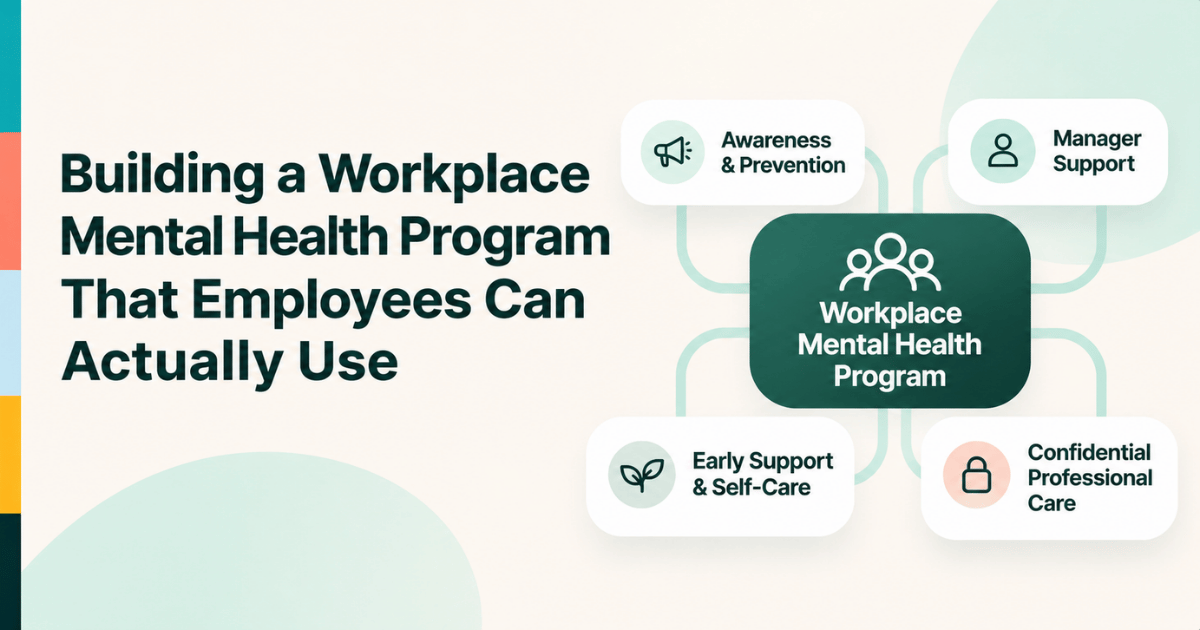
Building a Workplace Mental Health Program That Employees Can Actually Use
A workplace mental health program is more than a policy in an employee handbook. For Philippine employers, it means creating a workplace where mental health is taken seriously, employees know where to find support, managers know how to respond, and people can access appropriate care without fear of judgment or discrimination.
Under the Mental Health Act (Republic Act No. 11036) and DOLE Department Order No. 208-20, private-sector employers are expected to develop and implement workplace mental health policies and programs. But having a policy is only the starting point. The real challenge is making sure the program works for the people who need it.
For HR leaders, this means moving beyond compliance documents and occasional awareness activities toward a workplace mental health program that employees understand, trust, and can realistically use.
Who Should Be Building a Workplace Mental Health Program?
A workplace mental health program is relevant to organizations of every size, but it becomes particularly important for employers managing large, distributed, or high-pressure workforces.
This includes:
- CHROs and HR leaders who want to strengthen employee wellbeing while balancing organizational priorities, limited resources, and employee expectations.
- People and Culture teams responsible for engagement, retention, benefits, employee experience, and workplace culture.
- OSH committees and safety officers integrating mental health into occupational safety and health programs.
- Business leaders and executives looking to build healthier teams, reduce avoidable workplace risks, and support sustainable performance.
- Total Rewards and Benefits teams evaluating whether existing benefits provide employees with meaningful and accessible support.
Employees may be dealing with stress from work, but their challenges do not always begin or end at the workplace. Financial concerns, family responsibilities, relationship difficulties, health concerns, grief, and other life circumstances can affect how someone feels and functions at work.
A workplace mental health program should recognize the whole person—not simply treat every concern as a productivity issue.
What Does an Effective Workplace Mental Health Program Look Like?
The most effective programs combine prevention, education, support, and access to professional care.
1. Start with a clear policy
Your workplace mental health policy should explain the organization's commitment to mental health, how employees can access support, how confidentiality is protected, and how discrimination or stigma will be addressed.
The policy should also be developed and implemented with the appropriate management, HR, OSH, and employee representatives, rather than treated as a document that HR completes in isolation.
The DOLE guidelines under Department Order No. 208-20 provide a framework for implementing workplace mental health policies and programs in the private sector.
2. Make mental health awareness part of everyday work
Employees cannot use services they do not know exist. Regular communication helps normalize conversations about mental health and makes support easier to find before concerns become overwhelming.
Employers can introduce:
- Mental health awareness campaigns
- Educational webinars and workshops
- Stress-management and coping-skills sessions
- Wellbeing activities
- Self-care resources
- Regular reminders about available support
- Communication that encourages employees to seek help without shame
The goal is not to turn every employee into a mental health expert. It is to help people recognize when they may need support and understand where to go.
3. Equip managers to respond appropriately
Managers are often the first people to notice when an employee's behavior, engagement, or performance changes. However, they should not be expected to diagnose mental health conditions or act as counselors.
Instead, managers need practical guidance on how to:
- Recognize signs that someone may be struggling
- Approach conversations with empathy
- Listen without judgment
- Avoid stigmatizing language
- Respect confidentiality
- Understand when and how to refer an employee for professional support
- Respond appropriately to difficult or urgent situations
Training managers to respond with care can help create a workplace where employees feel safer asking for help.
4. Provide access to confidential professional support
Awareness and education are important, but they are not substitutes for professional care.
Employees should have a clear and accessible way to seek support for concerns such as stress, anxiety, burnout, relationship difficulties, grief, personal challenges, or other mental health concerns.
A referral pathway should be easy to understand and should clearly explain what employees can expect, how to access services, and what information will remain confidential.
Confidentiality is especially important because employees may hesitate to seek help if they believe their personal concerns will be shared with their managers or HR.
How Infinit Care Can Help Your Workplace
Infinit Care helps organizations turn workplace wellbeing plans into accessible, connected support for employees.
Instead of relying on isolated activities or a single service, employers can build a program that combines everyday wellbeing resources with professional support and organizational initiatives.
Support employees beyond awareness campaigns
Employees can access resources and services designed to support different needs and stages of wellbeing, including:
- Wellbeing assessments
- Mood check-ins
- Self-care tools
- Educational resources
- Counseling
- Coaching
- 24/7 Care Chat
- Primary care and medical consultations
- Women's health support
- Nutrition services
- Workshops and organizational wellbeing programs
These services can help employees find support that is appropriate to their needs, whether they are trying to build healthier habits, manage everyday stress, or seek professional help.
Make support easier to access
A workplace program needs to fit the realities of employees' lives.
For organizations with hybrid, remote, onsite, or geographically distributed teams, digital access can make it easier for employees to discover and engage with available resources.
Infinit Care brings different wellbeing services together through a connected platform, helping employees navigate support without having to figure out where to start on their own.
Give HR more visibility into program engagement
HR leaders also need to understand whether their program is reaching employees.
With appropriate privacy safeguards, aggregated reporting can help organizations review engagement, service utilization, and broader wellbeing trends. These insights can inform future communication, program planning, and organizational initiatives.
Individual clinical information should remain confidential and should not be used as employee performance information.
Infinit Care's published Privacy Policy outlines its privacy commitments, the information it processes, data subject rights, safeguards, and the use of aggregated employee reporting.
How to Apply a Workplace Mental Health Program in Your Organization
You do not need to launch everything at once. A practical implementation approach can help HR teams move from planning to actual employee support.
Step 1: Review what you already have
Start by reviewing your current workplace mental health policy, benefits, employee communication, referral pathways, and wellbeing activities.
Identify what is already working, what employees may not know about, and where gaps exist.
Step 2: Understand your workforce
Consider the realities of your employees:
- Are they working onsite, remotely, or in a hybrid arrangement?
- Do they work shifts?
- Are they spread across multiple locations?
- What challenges are common in their roles?
- Are there barriers that make it difficult to access support?
- Do employees understand what is confidential?
The answers can help you design a program that is relevant rather than generic.
Step 3: Build a program around actual needs
Your program can combine several components depending on your workforce and organizational priorities:
- A workplace mental health policy
- Awareness and educational activities
- Manager training
- Employee wellbeing campaigns
- Access to professional support
- Referral mechanisms
- Preventive wellbeing resources
- Organizational workshops and programs
- Appropriate monitoring and reporting
Step 4: Communicate clearly and consistently
Launching a program is not enough. Employees need to know what it offers, how to access it, when to use it, and what happens after they reach out.
Use communication channels your employees already use. Keep instructions simple, repeat important information, and avoid making mental health support sound intimidating or overly clinical.
Step 5: Review and improve
A workplace mental health program should evolve.
Review participation, engagement, feedback, service utilization, and relevant workforce trends at appropriate intervals. Use these insights to identify what employees are engaging with, what needs improvement, and where additional support may be helpful.
The purpose of measurement should be to improve the program—not to identify or penalize employees who seek help.
What Employers Should Know About Workplace Mental Health Compliance
Philippine workplace mental health requirements are supported by several important legal and regulatory references.
The Mental Health Act (RA 11036) establishes the national mental health policy and includes provisions on mental health promotion and policies in the workplace.
DOLE Department Order No. 208-20 provides guidelines for workplace mental health policies and programs in the private sector.
DOLE Labor Advisory No. 19, Series of 2023 provides supplemental guidance on implementation.
Employers should also consider the requirements of the Data Privacy Act of 2012 (RA 10173), particularly when handling sensitive personal information, including health information.
A workplace mental health program should be implemented in a way that protects confidentiality, respects employees' rights, and provides appropriate access to support.
Infinit Care can help organizations strengthen their implementation through wellbeing services, employee support, education, organizational programs, and reporting. However, employers remain responsible for their own policies, implementation, records, and regulatory obligations. A service provider should support—not replace—the organization's compliance responsibilities.
Frequently Asked Questions
Is a workplace mental health program mandatory in the Philippines?
Yes. Republic Act No. 11036, or the Mental Health Act, and DOLE Department Order No. 208-20 provide the legal framework for workplace mental health policies and programs in the private sector. Employers should review the relevant guidelines and ensure that their program is properly developed and implemented.
What should a workplace mental health program include?
A workplace mental health program may include policies, awareness and education, manager training, non-discriminatory practices, confidentiality safeguards, access to support and treatment, referral mechanisms, and wellbeing initiatives. The program should be appropriate to the organization's workforce and workplace conditions.
Does an employee mental health program need to include counseling?
Counseling is an important part of a comprehensive program, but it should not be the only component. Awareness, prevention, education, manager capability, wellbeing activities, and access to different forms of support also matter.
How can HR encourage employees to use mental health services?
Employees are more likely to engage when they understand what is available, know how to access it, and trust that their information will remain confidential.
HR can encourage engagement through regular communication, simple access instructions, approachable messaging, different support options, and initiatives that normalize mental health as part of everyday wellbeing.
How can employers measure the effectiveness of a workplace mental health program?
Employers can review indicators such as program participation, service utilization, employee awareness, feedback, engagement with wellbeing activities, and relevant workforce trends.
These indicators should be interpreted carefully. Utilization alone does not prove improved mental health or business outcomes, and employee-level clinical information should remain confidential.
Further Reading
For employers who want to explore the legal requirements and practical guidance further:
- Republic Act No. 11036 — Mental Health Act
- DOLE Department Order No. 208-20 — Workplace Mental Health Policies and Programs for the Private Sector
- DOLE Labor Advisory No. 19, Series of 2023 — Supplemental Guidelines on Workplace Mental Health Policy and Program Implementation
- Republic Act No. 10173 — Data Privacy Act of 2012
- WHO — Mental Health at Work
- WHO — Guidelines on Mental Health at Work
- Infinit Care Privacy Policy
Let's Build a Workplace Where Support Is Easier to Find
A workplace mental health program should not exist only because it is required. It should help employees understand their wellbeing, feel more comfortable seeking support, and know that help is available when they need it.
For HR leaders, the challenge is finding a practical way to bring all of these pieces together without having to manage every service, activity, and employee touchpoint on their own.
Infinit Care can help your organization develop and implement a connected workplace wellbeing program—from employee access to professional support, wellbeing initiatives, organizational programs, and insights that help guide your next steps.
Let's discuss how Infinit Care can support your workplace.
Book a Discovery Call or email [email protected] to explore how you can apply a workplace mental health program in your organization.