EAP vs. Employee Wellbeing Platform
An Employee Assistance Program (EAP) and an employee wellbeing platform both aim to support employees, but they differ in how support is delivered and how employees engage with it. Traditional EAP arrangements often focus on providing assistance when an employee needs help, while an integrated wellbeing platform brings together mental health support, primary care, coaching, preventive healthcare, and digital tools for more continuous access to care. For employers, the difference comes down to more than having a benefit available. It is about making support easier to access, encouraging employees to use it, and understanding whether the program is meeting their needs.
Who Should Consider an Employee Wellbeing Platform?
- CFOs and Procurement Leaders: Reviewing HMO renewals and employee benefit costs, and looking for better value from existing services.
- CHROs and HR Leaders: Addressing low EAP participation, limited provider visibility, or a lack of useful workforce insights.
- Organizations Taking a Proactive Approach: Looking to support employee mental and physical health before concerns affect attendance, engagement, and performance.
EAP vs. Employee Wellbeing Platform
| Area | Traditional or Limited EAP | Employee Wellbeing Platform (Infinit Care) |
|---|---|---|
| Approach | Often reactive, with support accessed when employees request assistance | Proactive and continuous, supporting different wellbeing needs |
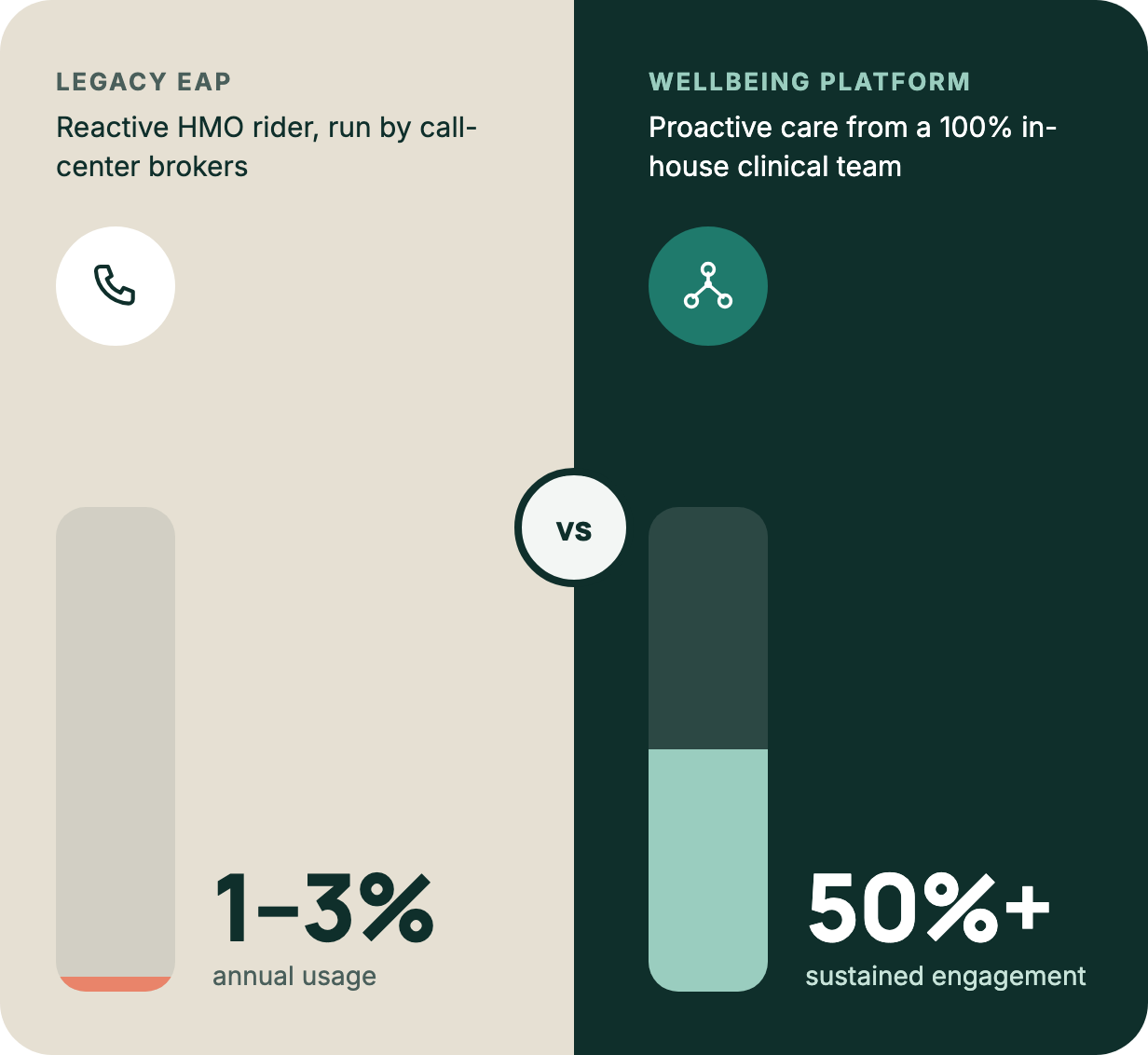
| Employee Engagement | Some limited arrangements report 1–3% annual usage | Infinit Care reports 50%+ sustained engagement in selected enterprise programs |
| Clinical Support | May rely on external providers or referral networks | Connected access to in-house clinical professionals and care services |
| Physical Health | May be separate from mental health support | Connects mental health with primary care and preventive health resources |
| Access to Care | Depends on provider network and appointment availability | Digital access to Care Chat, coaching, and bookable consultations |
| HR Reporting | May provide basic service usage summaries | Aggregated reporting and wellbeing trends to help HR understand engagement |
Service scope, provider arrangements, utilization, and reporting vary by EAP and platform. The figures above should be supported by the relevant program data before publication.
What Infinit Care Brings Together
- Connected Clinical Support: Access to coaching, counseling, and appropriate psychiatric referral pathways.
- Primary and Preventive Healthcare: Consultations with medical doctors and access to preventive health resources.
- 24/7 Care Chat: Digital emotional support and guidance through Care Chat.
- Personal and Lifestyle Guidance: Support for everyday concerns through available coaching and advisory services.
- Employer Program Support: Program coordination, employee communication materials, engagement activities, and utilization reviews.
Employee Engagement and Business Value
In one reported enterprise case involving a GCC workforce of approximately 1,000 employees, Infinit Care recorded platform engagement growth from 15% to nearly 60% over 24 months. The client's previous EAP utilization was reported at around 1%.
This illustrates why employers should look beyond whether a benefit is included in their package. Awareness, accessibility, employee trust, and continued engagement all influence whether people use the support available to them.
Higher participation can give organizations a better understanding of employee needs and help identify opportunities to improve their wellbeing programs. Financial returns, including reductions in absenteeism, presenteeism, and turnover, should be measured against an appropriate baseline rather than assumed from utilization alone.
Frequently Asked Questions
Our HMO already includes a free EAP. Why should we consider a separate platform?
An existing EAP may already provide useful counseling and assistance. The important questions are whether employees know how to access it, whether they use it, and whether its services meet their needs. If participation is low or support is limited, an integrated wellbeing platform can complement existing benefits with additional mental health, primary care, coaching, and preventive services.
Does an employee wellbeing platform replace our HMO?
No. An employee wellbeing platform complements your HMO. Your HMO continues to provide coverage under its policy, while Infinit Care connects employees to everyday mental health support, primary care access, coaching, and preventive wellbeing resources.
Make More of Your Employee Benefits
Your organization may already be providing employee support. The next step is making sure that support is accessible, relevant, and used.
Book a Discovery Call to review your current EAP arrangement and explore how Infinit Care can complement your existing employee benefits.