How to Measure Employee Wellbeing Program ROI
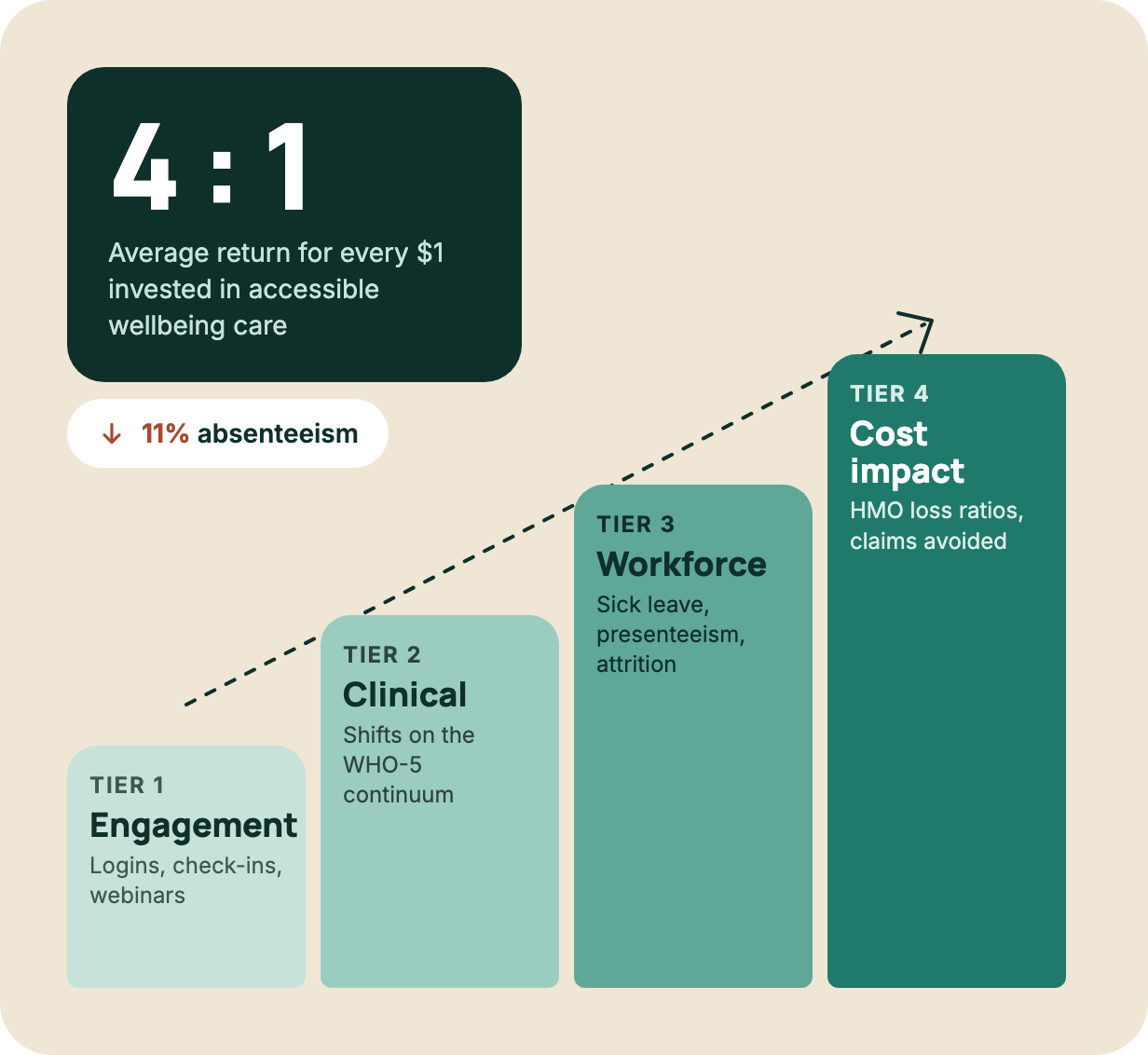
Measuring employee wellbeing program Return on Investment (ROI) requires moving beyond superficial utilization headcounts to cross-analyze program engagement against hard financial metrics: medical claims loss ratios, absenteeism days, and avoidable turnover. When health data remains locked in silos—with HMO claims, onsite clinic logs, and wellness vendor reports isolated from one another—employers cannot assess financial effectiveness. By unifying clinical engagement with claims analysis, Philippine enterprises can evaluate the direct biopsychosocial links that yield a proven 4-to-1 financial return on proactive care.
Who Needs to Measure Wellbeing Program ROI?
- C-Suite & Managing Committees (Mancom): Leadership looking for verified financial accountability before approving wellness benefit budgets.
- Benefits & Total Rewards Analysts: Professionals responsible for evaluating HMO premium inflation, stop-loss triggers, and benefit utilization efficiency.
- HR Directors: Leaders seeking data-backed business cases to upgrade company-wide mental and preventive health programs.
The 4-Tier Framework for Measuring ROI
Tier 1: Adoption & Engagement (App logins, check-ins, webinar attendance)
                           │
Tier 2: Clinical Improvement (Shifts along the WHO-5 Continuum)
                           │
Tier 3: Organizational Metrics (Sick leave days, presenteeism, attrition)
                           │
Tier 4: Healthcare Cost Impact (HMO loss ratios, specialist claims avoidance)
- Step 1: Baseline Health Stratification: Deploy baseline WHO-5 and Digital Health Risk Assessments (DHRA) to measure the workforce's initial physical and mental risk distribution.
- Step 2: Cross-Stream Data Aggregation: Securely map platform engagement against onsite clinic logs and HMO specialist claims categories (e.g., cardiovascular, migraines, gastrointestinal issues).
- Step 3: Cohort Analysis: Track health outcomes of active platform participants versus non-participants over a 12-month period to isolate program impact on sick leave days and doctor visits.
- Step 4: Premium Impact Modeling: Present aggregated claims reduction data during annual HMO negotiations to secure lower premium adjustments.
Tools and Support for Measuring ROI
- Comprehensive Well-Being Scorecard: Rapid evaluation mapping your current organizational maturity from Reactive to Preventive.
- Integrated Medical & Psychometric Dashboards: Automated tracking of WHO-5 wellbeing scores alongside physical risk markers.
- Claims & Clinic Data Mapping Facilitation: Strategic workshops helping HR teams synthesize HMO reports, clinic data, and wellbeing metrics.
- Quarterly Executive Insights Presentation: Custom Mancom-ready reporting detailing program reach, risk reduction, and financial efficacy.
What the Data Can Reveal
- Connecting Siloed Risk: Infinit Care data shows that employees flagged in the high-risk physical category have WHO-5 wellbeing scores 20% lower than healthy counterparts, proving that physical symptoms drive mental fatigue.
- The "Invisible" 30%: In corporate screenings, 30% of employees in severe burnout showed zero abnormal findings on traditional physical exams (APEs). Without layered psychometric data, legacy vendors miss these individuals until they become high-cost physical claims.
- Direct Cost Reductions: Documented 11% reductions in absenteeism across active client populations.
Frequently Asked Questions
What is the typical ROI of an enterprise wellbeing platform?
Independent international analyses and Infinit Care client benchmarks show average returns of $4 for every $1 invested in accessible, standalone wellbeing platforms through lower turnover, reduced sick leave, and controlled HMO claims.
How can we prove wellbeing programs reduce HMO claims?
By cross-referencing program participation with your HMO claims loss ratios and onsite clinic logs. When employees resolve stress and lifestyle risks early, visits for stress-induced physical conditions (hypertension, migraines, gastrointestinal distress) decline.
Start Measuring the Impact of Your Wellbeing Program
Stop guessing your program's impact. Start measuring real ROI.
Book a Discovery Call to request a sample ROI evaluation and data-mapping session.