Workplace Mental Health Program for Employers
A workplace mental health program should do more than provide a hotline or organize an occasional wellness seminar. It should give employees practical ways to look after their wellbeing, make professional support easier to access, and help managers respond when someone may be struggling.
For employers, this means building a system that supports people before concerns become more difficult to manage. It brings together mental health education, self-care resources, coaching, counseling, referral pathways, and support for people leaders. With the right structure, mental health becomes part of how an organization cares for its workforce—not just something it addresses when a crisis happens.
Who Can Benefit from a Workplace Mental Health Program?
A structured workplace mental health program can help organizations that want to make employee support more accessible and consistent.
- Organizations experiencing absenteeism and employee turnover: Employers noticing changes in attendance, engagement, morale, or employee retention and looking for ways to better understand and support their people.
- High-pressure and demanding workplaces: BPOs, global capability centers, finance, legal, engineering, creative, and other teams where sustained workloads, shifting schedules, and high cognitive demands can affect employee wellbeing.
- HR and People & Culture leaders: Decision-makers responsible for employee experience, workplace wellbeing, benefits, and creating an environment where people feel comfortable asking for support.
- Organizations with hybrid and distributed teams: Employers that need support to reach employees across different locations, schedules, and work arrangements.
How Infinit Care Supports Employees
People do not all need the same kind of support at the same time. Some may simply want to build healthier habits, while others may need someone to talk to or professional clinical care.
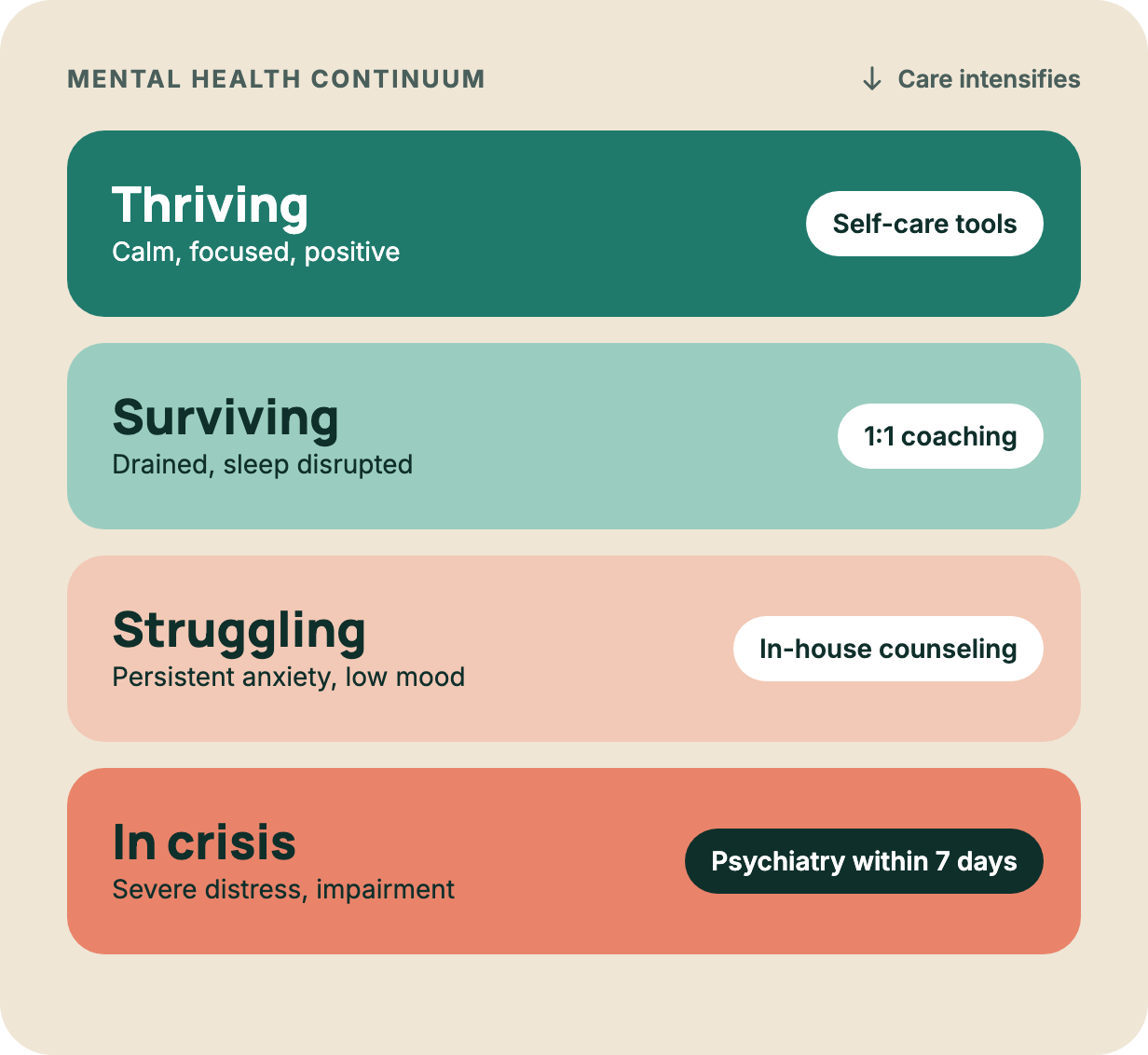
Infinit Care uses a stepped approach to help connect employees with support that fits their needs. The following stages are a practical service-matching framework, informed by broader mental health concepts such as Corey Keyes' work on flourishing and languishing. They are not a clinical diagnosis or a substitute for professional assessment.
| Employee's current experience | What they may be experiencing | Possible support |
|---|---|---|
| Doing well and building resilience | Feeling positive, managing everyday demands, and wanting to maintain healthy routines | Wellbeing check-ins, self-assessments, digital self-care tools, and habit-building resources |
| Feeling stretched | Persistent worry, disrupted sleep, low energy, or difficulty balancing responsibilities | One-on-one coaching and practical guidance for personal and everyday challenges |
| Having a difficult time | Ongoing anxiety, low mood, emotional distress, or changes in sleep and appetite | Confidential counseling with qualified mental health professionals |
| Needing urgent support | Severe distress, significant changes in daily functioning, or concerns that require immediate clinical attention | Initial support and referral, clinical assessment, and coordinated care based on the individual's needs |
The goal is to make it easier for employees to take the next step, whether that means using a self-help resource, speaking with a coach, booking a counseling session, or accessing further clinical care.
What the Program Can Include
Infinit Care brings together different forms of support so employees have more than one way to look after their mental health.
Confidential Counseling
Employees can access one-on-one counseling through available virtual and on-site arrangements. These sessions provide a private space to discuss personal concerns and work through challenges with qualified mental health professionals.
24/7 Care Chat
Care Chat gives employees access to emotional support through mobile chat at any time. It can help people talk through what they are experiencing, identify possible next steps, and access appropriate support.
Care Chat is not a substitute for emergency services or a full clinical assessment when urgent medical attention is needed.
Coaching
One-on-one coaching helps employees work through personal and everyday challenges, build practical skills, and make progress toward their goals. Depending on the available program, coaching may cover areas such as career, lifestyle, and personal development.
Psychiatric and Further Clinical Referrals
When an employee needs support beyond counseling, appropriate clinical referrals can help them access further assessment and care. Appointment availability and timelines depend on clinical needs and the applicable service arrangements.
Critical Case Support and Referral
Some situations require more coordinated attention. Where appropriate, Infinit Care can support the process of connecting employees to qualified professionals and relevant services. Urgent safety concerns should always be escalated through the appropriate emergency or clinical pathways.
Manager Training and Education
Managers are often among the first people to notice changes in an employee's behavior or performance. They are not expected to diagnose mental health conditions or act as counselors. They do, however, benefit from knowing how to start supportive conversations, recognize when someone may need help, and guide employees toward appropriate resources.
Workshops can introduce people leaders to Psychological First Aid principles, supportive communication, and appropriate referral practices.
Group Support and Wellbeing Sessions
Group sessions can give employees a structured space to learn, share experiences, and feel less alone. Depending on the program, these may be useful during periods of organizational change, grief, or other shared challenges.
Building a Workplace That Supports Mental Health
A workplace mental health program should not place the entire responsibility for wellbeing on employees. Access to counseling and self-care tools matters, but so do the conditions people work in every day.
A more supportive approach considers both individual needs and the workplace environment. This can include:
- Making mental health information and support easier to access.
- Encouraging respectful conversations and reducing stigma.
- Helping managers respond appropriately when employees raise concerns.
- Providing clear pathways to counseling and further clinical care.
- Protecting the confidentiality of employee health information.
- Considering appropriate work arrangements and support when employees need them.
- Reviewing participation, feedback, and program needs to improve support over time.
In the Philippines, Department Order No. 208, Series of 2020, provides guidelines for mental health workplace policies and programs in the private sector. DOLE Labor Advisory No. 19, Series of 2023, provides supplemental guidance on implementation and access to mental health and self-care services. Employers remain responsible for developing and implementing their workplace policies and programs in line with applicable requirements.
A provider can help deliver services and support implementation, but it does not replace the employer's responsibility for its workplace policy, working conditions, and compliance obligations.
Measuring Progress and Understanding Employee Needs
A workplace mental health program should be reviewed based on whether employees can access and use the support available to them—and whether the program continues to respond to their needs.
Depending on the program design and available reporting, employers may review:
- Employee registration and participation.
- Use of available wellbeing services.
- Assessment participation and aggregated wellbeing trends.
- Employee feedback and satisfaction.
- Common themes and support needs across the workforce.
- Program activities and opportunities for improvement.
These insights can help HR and leadership understand where support may be needed and make more informed decisions about future initiatives.
Individual counseling conversations and personal health information should remain confidential. Employer reporting should be handled using appropriate privacy safeguards and should not expose an employee's personal clinical information.
Frequently Asked Questions
What are the most common reasons employees in the Philippines seek counseling?
Employees may seek counseling for many reasons, and not all of them are directly related to work. Relationship difficulties, family concerns, financial pressure, physical health challenges, and workplace experiences can all affect mental wellbeing.
This is why workplace mental health support should consider the person as a whole, rather than focusing only on stress caused by work.
How quickly can an employee in crisis see a specialist?
Employees can use Care Chat to access initial emotional support and guidance on possible next steps. When further clinical care is needed, the appropriate referral and appointment process depends on the employee's needs and the available service arrangements.
If someone is in immediate danger or needs emergency medical attention, they should be directed to appropriate emergency services rather than relying on a chat service or routine appointment.
Can we conduct counseling sessions on-site at our office?
Yes. Infinit Care can support hybrid arrangements that combine virtual services with on-site counseling, depending on the organization's program requirements and agreed schedule.
On-site sessions can give employees another way to access support while maintaining an appropriate level of privacy.
Is a workplace mental health program only for employees experiencing mental health difficulties?
No. A good program should support people at different stages of their wellbeing journey. Some employees may benefit from self-care resources and education, while others may need coaching, counseling, or further clinical support.
Making support available early can help employees take action before their concerns become harder to manage.
What is the employer's role in a workplace mental health program?
Employers play an important role in creating a supportive work environment, communicating available resources, protecting employee confidentiality, and establishing appropriate policies and referral pathways.
A mental health provider can help deliver services, but the employer remains responsible for its workplace policies, implementation, and applicable legal obligations.
Give Your People Access to the Support They Need
A healthier workplace starts with making support easier to find, easier to access, and easier to talk about.
Infinit Care helps organizations connect employees with mental health support, coaching, counseling, and wellbeing resources through a more structured approach to workplace care.
Book a Discovery Call to explore a workplace mental health program for your organization.